


Understanding what lies beneath the ground is one of the most critical stages in any construction or development project. Site investigations reveal soil conditions, groundwater levels, contamination risks, and other factors that directly influence design, safety, and cost.
Yet even qualified firms make mistakes in site investigation services. Missteps can lead to delays, structural issues, and budget overruns. For clients across Birmingham, the West Midlands, and beyond, Integrated Designs & Associates Ltd delivers site investigation, geotechnical, and foundation services with precision and reliability.
In this article, we walk through the most common pitfalls in site investigations and explain how to avoid them, drawing on the standards and expertise we apply in every project.
Why Thorough Site Investigations Matter
Before construction begins, you need data you can trust:
- Foundation safety: Correct knowledge of soil strength and behavior ensures stable foundation design.
- Regulatory compliance: Environmental, planning and building regulations require proper investigation and reporting.
- Cost control: Early detection of issues like contamination or weak ground prevents expensive surprises mid-build.
At Integrated Designs, our Geotechnical Solutions and Ground Investigations services form the backbone of our civil engineering offering. We also integrate structural design, foundation design, and architectural services to deliver cohesive solutions.
Common Pitfalls in Site Investigations (and How to Avoid Them)
1. Inadequate Planning & Scoping
When the scope is vague or rushed, critical areas may be missed, leaving you with gaps in data that later force redesigns or additional investigations.
How Integrated Designs avoids this:
- We engage our geotechnical engineers at the early concept stage.
- We carry out a desk study, reviewing geological maps, local history, and any existing site data.
- With this, we define a clear scope of work covering intrusive borehole and/or trial pit investigations, environmental testing, and ground gas & groundwater monitoring.
Clients often find that a well-scoped investigation actually saves money compared to patching gaps later.
2. Insufficient Ground Investigation Coverage
Relying on too few test points or shallow probes can miss deeper soil features, voids, or groundwater fluctuations.
Our approach:
- Use a mixture of boreholes, trial pits, and CPTs tailored to the site’s complexity.
- Adjust coverage density depending on project scale (residential, commercial, infrastructure).
- Ensure vertical and lateral coverage to capture spatial variability.
This keeps surprises low when you move into the design and construction phases.
3. Overlooking Environmental Factors
Often contamination, historical industrial use, or protected land features are missed if environmental investigation isn’t integrated into the process.
How we handle it:
- Include Phase 1 Environmental Assessments as standard when site history indicates risk.
- Where risk is identified, follow up with Phase 2 investigations (soil sampling, geochemical testing, ground gas and groundwater monitoring)
- Coordinate with environmental regulations enforced by the Environment Agency to maintain compliance.
This prevents last-minute hold-ups, remediation orders, or unsafe site conditions.
4. Ignoring Groundwater & Seasonal Variations
Groundwater may be quiet during dry months but rise significantly in wet seasons. Ignoring this can lead to foundation issues, seepage, or instability.
What we do differently:
- Set up piezometers or monitoring wells to track groundwater levels over time.
- Simulate water movement and seasonal fluctuation.
- Consider drainage, waterproofing, and dewatering options upfront.
5. Misinterpreting Geotechnical Data
Even with good field data, incorrect interpretation (wrong bearing pressure, settlement assumptions) can lead to structural failures or over-conservative designs.
How we counter this:
- Use experienced geotechnical engineers for interpretation.
- Employ modelling software and cross-check with lab tests (particle size, CBR, shear strength).
- Reconcile field and lab data and involve structural engineers early.
By combining our structural, foundation, and geotechnical services, we reduce miscommunication and ensure consistency in the design chain.
6. Failing to Account for Future Conditions
Many investigations focus on current conditions only, ignoring future changes like adjacent development, climate shifts, or settlement over years.
Our forward-looking approach:
- Factor in future loadings, subsidence, and hydrological shift in design.
- Use adaptive drainage and substructure options that accommodate change.
- Coordinate with planning teams to anticipate adjacent land modifications.
Steps to a Successful Site Investigation
Here’s how we structure a robust investigation:
1. Preliminary Desk Study – Historical Maps, Geo-Environmental Data, Coal & Non-Coal Mining Data, Historical Borehole Logs, Planning History
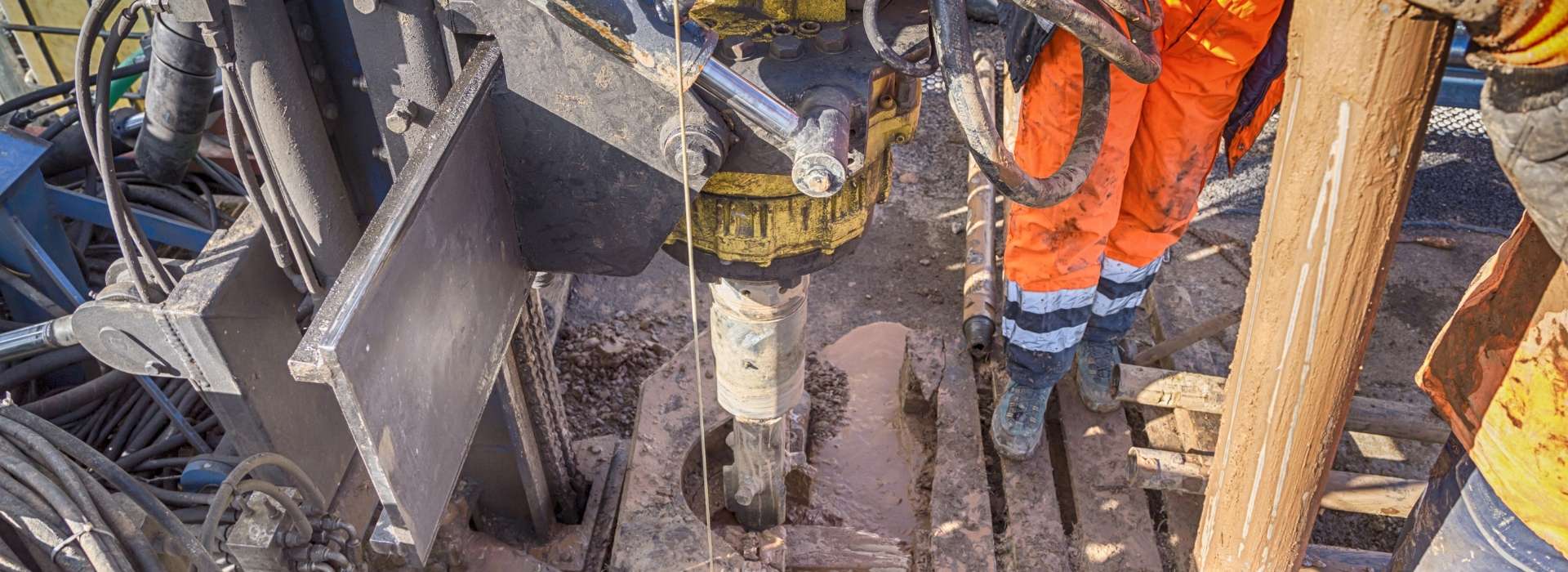
2. Fieldworks – Boreholes, Trial Pits, CPTs, Ground Gas & Groundwater Monitoring.
3. Laboratory Testing – Soil Grading, Soil Strength, Soil Permeability, Geochemical Contamination Analysis, Shrink-Swell Behaviour.
4. Analysis & Reporting – Geotechnical report to guide design.
5. Construction & Monitoring – Ongoing checks and adjustments if unexpected ground behaviour emerges..
This aligns with our full service model, linking geotechnics, foundation design, structural engineering, and architectural integration.
FAQs: Site Investigations & Groundwork
1. Why is a site investigation so important?
It provides the data that underpins safe, cost-effective, and compliant construction design.
2. How long does a site investigation take?
Depending on site complexity and scope, from a few days to several weeks.
3. What tests are included?
Typical tests include boreholes, trial pits, CPT, soil sampling, groundwater monitoring, contamination screening.
4. What is the cost in the UK?
Smaller sites may cost £2,000–£8,000; larger or complex sites may range up to £20,000+.
5. What if the investigation reveals poor ground?
We may suggest solutions such as piling, soil improvement, drainage systems, or foundation redesign.
6. Can I reuse a site investigation later?
Yes, with periodic updates if the ground conditions or context changes (adjacent development, water table shifts).
Conclusion
Mistakes in site investigations can be expensive and dangerous. By tackling planning, coverage, environmental risk, groundwater, and proper interpretation early, you protect your budget, timeline, and structural integrity.
Integrated Designs & Associates Ltd is built on delivering confident, data-driven groundwork. Whether you need ground investigations, foundation design, structural engineering, or full architectural services across Birmingham and the UK, our multidisciplinary approach ensures your project starts strong.
Get in touch today to discuss your site. We’re ready to deliver precision, reliability, and peace of mind.
Call us now at 0121 358 2233
✉ Email: contact@integratedesigns.co.uk